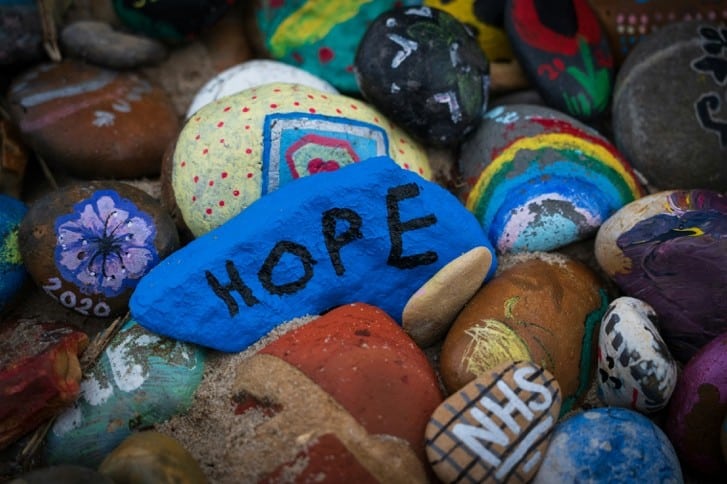
Recently, my son gave me Dr. Jane Goodall’s Book of Hope, subtitled “A Survival Guide for Trying Times.” During this spate of recent darkness – the murders at Brown University, Bondi Beach in Sydney, Australia, Rob and Michele Singer Reiner – I needed Dr. Goodall’s Hope, and the antidote that comes after snowfall while sitting before a blazing fire with a good book and a cup of hot tea.
Hope is different from passive wishful thinking, which is one of the first thoughts raised in the book. And in analyzing that distinction, Dr. Goodall talks about action and engagement as being the differentiators.
- Hoping something will happen but doing nothing about it is wishful thinking.
- That is real hope’s imposter.
Our cumulative actions matter and Dr. Jane Goodall, almost 90 years young when she wrote this book, expressed her belief that the acts we take together can help to save and improve our world for future generations.
Our amazing human intellect, the resilience of nature, the power of young people, and the indomitable human spirit are what Dr. Goodall describes as her reasons for Hope. As I read this list, I was reminded of Anne Frank, who as a young teenager was hidden for years during the Nazi invasion, yet kept her own hope alive, demonstrating her indomitable human spirit and clear intellect, which led to her diary and legacy roadmap for our engagement with her thoughts decades after she was murdered.
As Consilium practitioners working to help families restructure, we’re privileged to share space with people during vulnerable, dark times of uncertainty, and are entrusted to take action and create engagement so that people and families can move forward with Hope.
As we head together into 2026, we wish you light, solace, direction, and courage.
“How wonderful it is that nobody need wait a single moment before beginning to improve the world! …
You can always, always give something, even if it is only kindness!” – Anne Frank
Photo by Nick Fewings on Unsplash