Becoming Fierce: Sparking Your Personal Transformation With Stephanie James

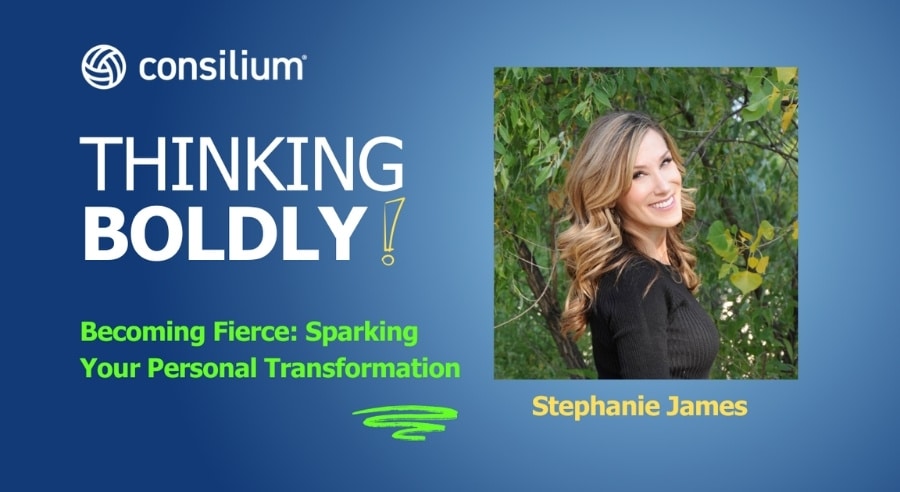
In a world saturated with quick fixes and surface-level advice, true personal transformation often feels like an elusive goal. But what if the key to profound change—the spark—is already within you? We sat down with Stephanie James, a true pioneer at the intersection of psychology, spirituality, and modern transformation. As a renowned Transformation Coach, Psychotherapist, acclaimed Author of Becoming Fierce and Your Big Fat Juicy Life, and host of the Igniting the Spark podcast, Stephanie brings decades of wisdom to helping individuals move beyond mere coping and into radical self-expansion. In this candid interview, Stephanie demystifies the role of a Transformation Coach, shares her deeply personal journey from feeling rejected to becoming fierce, and explains why self-kindness is the most powerful tool for navigating life’s most painful transitions, including divorce. Get ready to discover the “infuser” philosophy, the power of befriending yourself, and the ancient-meets-modern modalities Stephanie uses to help you excavate your inner light. If you’re ready to shift from “good enough” to truly thriving, this conversation is your ignition point.
—
Listen to the podcast here
Becoming Fierce: Sparking Your Personal Transformation With Stephanie James
We are thrilled to bring you a conversation with Stephanie James. Stephanie, thank you so much for joining us.
Thank you both. It is just my honor and such a joy to be with you.
Let me tell the world about who you are and the amazing things that you do. Stephanie James stands at the intersection of personal transformation and spiritual wisdom. She’s woven together her roles as a Transformation Coach, a Psychotherapist, an International Speaker, a Filmmaker, an accomplished Author, and pioneering Podcast Host of Igniting the Spark. She brings her powerful content to thousands of individuals whose lives have been changed and inspired by her work, and I count myself among those folks who have been inspired and changed as a result of your work, Stephanie. Again, thank you so much for taking the time to talk with us.
Thank you, Julie. That just touches my heart. Thank you so much.
Defining The Transformation Coach Role
Let me just start with a foundational question. What is a transformation coach? I think a lot of folks that are reading have had other kinds of coaches in their life. Divorce coach, professional coach, soccer coach. What is a transformation coach?
I get asked a lot the difference between as a Psychotherapist, I have one type of client, and as a Transformation Coach, I have a different type of client. I would tell you, it helps to illustrate by telling you the difference between the two. When someone comes to me for psychotherapy, they’re usually at a place in their life where it’s a pain point. Something isn’t working either emotionally, behaviorally, relationally. Something’s happened where there’s an impasse.
They’re coming so that they can learn specific techniques of how to help themselves feel and grow through that. When I get a transformation client, what’s happening is someone’s already at a good place in their life. They might be noticing, “I’m ready for expansion. I’m ready to take my life to maybe a different level of being that I don’t even know how to get there, but I can see that these are the areas I want to grow in.”
What I love about transformational coaching is it’s working with someone on their strengths, breaking through limiting beliefs and helping design a plan. It’s so tailored specifically. Of course there’s crossover in this but it’s really specifically tailored when someone’s like, “I want to get from here to here and I’m already in a place where I feel good, I’m ready to grow, and I just need that extra little help. How do I thrive? How do I allow myself to see myself maybe in a bigger capacity than I’m able to right now?”
Do people come to you for your transformation coach help when they’re at, you said, I think an inflection point. It could be they’re retiring, they’re divorcing, they’re going back into the workforce. Are those the kinds of places and opportunities that you see people coming to you and taking advantage of your work as a Transformation Coach?
Yeah, you really nailed it. I think as a psychotherapist, a lot of times as a trauma specialist, I have a lot of people that are coming in just out of some trauma. It’s a place in their life where there’s transition. There’s something happening. As you said, they got out of grad school and they’re like, “I can’t find a job and what might be limiting me?” I’ve had people come and they’re like, “I started a new business and I’m scared to death. What’s getting in the way here?”
It’s really about expansion. What’s fun for me, that’s a little bit different than being a psychotherapist, with a transformation coach, we get to go into all kinds of areas, whether it’s Pranayama breathwork, Kundalini yoga. I’m really utilizing so many different modalities, whether it’s all the way back to some of Tony Robbins’ incredible priming techniques that help people really learn how they can start their day in a way in which they can be primed to thrive. Also, I would say it’s utilizing lots of ancient wisdom with modern transformation tools. That marriage really creates a beautiful result in people’s lives. In both cases, it’s such a joy to watch people. To me, it’s like the deepest honor to watch people grow and heal. To be witness to that is phenomenal.
Integrating Spirituality, Psychology, & Science
I’ve heard you talk at some point, Stephanie, also about the intersection with spirituality and transformation and psychotherapy. Can you talk a little bit about how you see those being integrated or related?
This is 19 years as a psychotherapist and, God, I hate to say this, 37 years in the mental health field. I’ve had a lot of experience in understanding different walks of life. I’ve worked with populations from developmentally disabled to seriously mentally ill for three years working just solely with paranoid schizophrenics, adolescent psych, adult psych, hospitals, and geriatrics. I just I feel blessed that I’ve really been able to work in the realm as well as ten years in the school district.
Getting to see all kinds of different walks of life. The thing is, what I find is even if someone’s agnostic or atheist, it’s really there’s that inside of them that they might not label as a higher self, they might not label it as a higher consciousness. When they’re able to tap into that part of themselves, maybe it’s their own inner wisdom we could call it. We don’t have to call it the divine or God or anything like that, but it assists in the healing process.
That’s why it works so well with AA. If you know anyone that’s in a 12-step program, having a higher power is one of the essential pieces. I know people that literally have had as their higher power like a cartoon animal or someone that they said, “This is as far as I can go right now.” When we access those places, like I said, I just feel that that’s one of the beautiful things I’ve witnessed, is when people get more in touch with that whatever, I would call divine spark within them. Whatever they call it, it truly is an aid to the healing process. It’s a deeper wisdom they can tap into.
Do you feel like that was, for yourself, an evolution of your own growth, that you these things coalesced or were you always inclined to merge these fields together. Maybe it’s a chicken and egg question, but I’m curious when that came together for you this way.
I can tell you I remember many years ago being so excited when I would read the research that was really merging psychology, spirituality, and science and how that was just huge as it started blossoming. We had people like Bruce Lipton and Eckhart Tolle and even Joe Dispenza, people that were bringing this forward, Gregg Braden.
It went from being something that was woo-woo to something that was actually acceptable and that there was science that would back it up or psychology that would back it up and those things would merge. I would tell you, Heidi, that I from a very young age was very aware of being a spiritual being. I was very in touch with that. That was always a part of who I am.
It was always for me just a natural pursuit to be a spiritual seeker. There’s a picture of me that’s so funny that my mom has and I’m probably about four years old. I’m wearing this blue fuzzy coat and I’m beside a little girlfriend who has her little brown fuzzy coat on and I have my hand on her shoulder and I’m looking at her in this totally empathetic way. It’s the funniest little picture like I was already being a counselor at four years old. I’m doing this deep listening and I’m tuned in. I think there’s been this part of me that’s always been really curious, which is part of why I love what I do, about what makes someone who they are.
What is it that and so it’s like an investigative, if you will. It’s a mystery when you first meet someone and it’s really a divine and beautiful mystery. It’s not just an intellectual pursuit of why does this person behave the way they do or why is this person suffering? It’s like this exploration, like this gentle excavation to help this person rediscover, if you will, that spark that has always been alive within them, but it gets covered up with situations and circumstances and we forget. We forget that that’s what we truly are.
The Concept Of The “Spark” & Being An “Infuser”
That’s your brand. It’s the spark. You’ve talked a little bit about the origin of that. Tell us more in terms of where did that come from, how did that speak to you. When you talk about the divine spark, I guess putting those things together for us and what that means to you.
It’s so funny to me that that literally is my trademark. I own the trademark for The Spark, which is so funny to me because when I actually got the podcast, the original podcast was called The Spark and it came to me in a dream. I could see the logo, I could see this bright light, this top of a candle illuminated. For me, it really has made sense in all the things that I do.
My first film was called When Sparks Ignite, my first book was The Spark: Igniting Your Best Life and really what the spark is for me, it is that essence that’s in each one of us and we really do. We go through life and we have these external programs for happiness and there’s all these things we think, “If I could just be that, if I could just do that, then I’m going to be happy.”
The reality is it’s actually an inside job. When we allow ourselves to come back in, we can do what I just spoke about. I feel like in all my different mediums, it’s like how can we do that excavation so that we are aware that we are you could call it the spark of life, some people call it like the God seed. I don’t want it to be religious so I want to stay away from that, but it really is our essence. It’s the essence of who we are and no matter what we go through exteriorly, on the exterior, that spark is alive and well. Our work is how do we keep doing this excavation so we can be as clear of conduits as possible for as much to me, light and love to come through to us and through us out into the world.
Yeah, it’s interesting. It’s almost like this various siloed thinking systems, spirituality, psychotherapy, transformation. They’re all parts of a whole in a sense and they’re all prisms onto yourself. It depends what lens you’re looking through or how integrated they are, I suppose, what you see or how you see the world.
That’s just it. My job isn’t to get anyone to think any way that I do. I did a post about this. I did a video on Facebook and Instagram about how there’s all these influencers right now. That’s a big thing for people. I want to be an influencer. What my video was about is I said, “I don’t want to be an influencer. I don’t want to influence anyone to do anything. Instead, I would like to be an infuser.”
I’d like to help infuse people with belief in themselves. I’d like to infuse them with their own sense of love and infuse them with a belief in themselves. I don’t need to influence them. It’s not about me. I feel very humble at times and very grateful that I can be a conduit for that to come through me to help people to truly heal themselves.
The Meaning Of “Becoming Fierce”
You may not be an influencer, but you sure are everywhere. You influence people, obviously. You are influential, not necessarily an “influencer” because influencer, to me, it’s so surface and what you do is so deep. I love the infuser versus influencer. You’ve been doing a lot of thinking and writing and sharing of your wisdom with folks and I want to talk just briefly about your books and what you’ve written. I love the title of your book. Actually, all of your books. I love the titles of your books but Becoming Fierce, tell us about that. Tell us about being fierce and what that means to you and what that should mean to people like me that read your work.
Thank you. I have to tell you an interesting little story that goes with that title because I was being interviewed by Karen Curry Parker on her podcast for my first book, The Spark. As we were getting close to the end of the interview, she says, “Stephanie, what’s next for you?” I said, “It’s interesting. I’ll be at a stoplight and I’m scribbling on a piece of paper an idea that’s coming through or I’ll be at a stop sign and something will just hit me and so I’ll write it on a piece of paper.”
She’s like, “You must have another book coming through.” I said, “I feel like there’s a book coming through.” We get done with the interview, we’re off the recording and she said, “Stephanie, I don’t know if you know this, but my partner and I own a publishing company and we’d like to publish your next book.” It was so wild, so serendipitous.
She said, “I want you to meet with Michelle Vidette tomorrow and I’m going to set up this conversation.” I meet with her and as I’m speaking with her, I was sharing a little bit of my own personal story and part of what I was thinking the book was about. She said, “Stephanie, you are fierce.” Right then I was like, “The title is Becoming Fierce.”
That night, I woke up at 1:15 in the morning and wrote the entire outline. It was like it just downloaded. It was an incredible nine-month process. I always say my first two books were nine months each. They were like gestating a baby. You know what I love about that book? One of the chapters is like finding your inner roar, which is really about finding your voice.
The importance of finding our voice and to be able to speak it and share it and how do we become the most authentic version of ourselves? Being fierce isn’t about being aggressive or mean, it’s literally about showing up as the most authentic version of yourself in full expression. That’s what becoming fierce is about.
[bctt tweet=”Being fierce isn’t about being aggressive or mean; it’s about showing up as the most authentic version of yourself, in full expression.” via=”no”]
Hopefully, that gives you a little taste of what it is. At the end of every chapter, there’s ones on how to handle conflict, there’s a chapter detaching through love, lots of different chapters on even loving fiercely. How do we really tap into that unconditional I’m 100% here no matter what happens experience. At the end of each chapter, though, there are tapping in is what I call them and they’re specific exercises that help you whatever it is that you’ve read take it to a personal level and assimilate it.
Whether it’s a journaling exercise or maybe it’s a guided visualization, something that you can actually take and go like, ‘As I practice this now, I can assimilate and aluminize what I’ve read so now it’s my own experience.” My intent in in writing that book is helping other people to get in touch with their own inner authenticity, their fierce force through their voice, their behavior, their love, and how they can express that in the world.
I’ve got to ask you, when you talk about becoming fierce, it sounds to me like it wasn’t always that you felt fierce, like there’s a part of you that maybe this was evolutionary for you too. Could you maybe talk a little bit about that?
The Personal Journey To “Becoming Fierce”
Absolutely. Yeah, it’s so interesting, Heidi, and I share this story in the book that in a nutshell, at sixteen, when my father left, my father and stepmother left to go to Austin, I had been living with my dad when my dad left my mom, I moved with dad, I was a total daddy’s girl. When I decided to stay as a junior and finish high school, that really angered my father and he didn’t speak to me for a year.
Without going into a lot of negative history, there was a lot of wounding that went on through a stepmother who made it very clear that she didn’t want me around, that she considered me the other woman. From the moment she and dad were together, I wasn’t allowed to speak to my father alone, I wasn’t allowed to be in a room with him alone and until the day he died, I was not allowed to speak with him alone on the phone.
Just to give you an idea, it’s like I don’t come to all this without having my own wounds and without having my own experience. I share this because it really gives context to what happened then. I feel like for probably for the next sixteen years, I went around with those external programs for happiness and really they were external programs for love.
I did not think I was lovable because I felt so rejected by my dad. I was like, “I can earn love. If I just get the right grades, if I look good enough, if I have the right relationship, if I do all these things right, then I can earn love.” Interestingly, I was probably around 33 years old, I went to San Francisco to go to a healing institute to practice how to be more of a that conduit for healing.
I walk in the door and Dr. Ibrahim Jaffe was our major instructor, we had a couple of other teachers. As I walk in, he shakes my hand and it was one of those moments where you start to feel uncomfortable, you’re like, “This guy is looking into my soul.” He’s up there on stage talking and he’s partway through his presentation, there’s about 40 of us students in the audience.
He gets partway through and he looks into the audience and he says, “You in the blue coat, I have a message for you.” I’m looking around and I look down I’m like, “I’m the one in the blue coat.” I can’t hear him. He says whatever it is the message for me, I can’t hear him. I look at my girlfriend that’s sitting beside me. I’m like, “Did you hear him?” She just shrugged her shoulders. He said, “My dear, what I’m trying to tell you.” I still can’t hear him. On the third time, people were starting to laugh and he’s like, “You really have a block from hearing this?”
What I am trying to say is and the moment he said that, all the air conditioning units in the place came on and nobody could hear it. Now everybody’s laughing like hysterical like, “What is going on?” He’s like, “Okay, my dear. Come up here.” I go up there and when I sat down on the little steps by the stage, he says, “My dear, what is so hard for you to hear, what is so hard is stop trying.”
How he knew this, I’ll never know, but he said, “You’ve been trying to be perfect your whole life for your father and now you’re doing it for your husband. Stop trying.” It really was that turning point in my life where I realized, “It is not just external that I’ve been trying to get, that truly, this is an inside job. I’ve got to learn how to befriend and love myself.” That’s where this started, by going like, “Okay, becoming fierce, becoming someone who knows how to love and befriend themselves, that was a huge catalyst, a huge opening for all of this work in the world.”
Thank you so much for sharing that. I’m really struck by a couple of times in the last couple of sentences, you word used the word befriending and being fierce, like these two things align. How is it that those things are parallel or they work together? Can you talk a little about that?
Sure, because what happens when we learn how to befriend ourselves, number one, we start showing up for ourselves. We can all think back to times we’ve let ourselves down over and over again. “I’m going to start eating right, I’m going to start exercising. I’m not going to be late anymore. I’m not going to do this anymore,” and we make these promises to ourselves and it’s like we betray ourselves over and over again.
[bctt tweet=”When we learn how to befriend ourselves, we start showing up for ourselves.” via=”no”]
We betray ourselves also when we play small, when we’re afraid to speak our truth. There’s all these ways that we can subtly betray ourselves. Befriending ourselves, really, it’s a practice. I tell people it’s not a decision you make. You don’t just wake up one day and go, “I love myself. I’m going to be my own best friend.” That’s a great thought and it takes practice.
It’s like building a muscle, so we have to cultivate that. It starts by showing up for yourself and I invite all of my clients that I work with, anyone I work with, to learn how to show up even if it’s ten minutes for yourself first thing in the morning to allow yourself to be priority in your own life so that you’re checking in what best serves me today? How can I take care of myself the best in this morning?
It’s so unselfish because as we start cultivating this friendship with ourselves, we show up more fully for others. We are so much more present. I think that sense of becoming fierce, that’s why it’s not aggressive. That’s why it’s not this other energy that can come when we’re not resourced. Truly, becoming fierce is like I’m holding on to myself and so I have a sense of my own, not power over anyone, but I am feeling empowered in myself because I’ve created space for myself in my life so I can show up as the most grounded, again, most fully authentic person I can be in this moment.
It’s also, I think, very intentional. That intentionality makes you be more reflective about what else you do.
Advice For Those In Transition/Divorce
Many of our readers are people who are experiencing divorce or they are professionals who are working with people who are experiencing divorce. What you’ve described in terms of the work that you do and the being an infuser and a transformation coach, if there were one lesson that you would whisper to the folks, like your professor did to you, that you would whisper to folks who are on that journey, what would it be?
Interestingly, when you said that, the first thing that popped into my mind, and this isn’t anything I’ve ever rehearsed or maybe even spoken in an interview. I’ve been in hundreds and hundreds of interviews. What came to me, the whisper I would say is be kind to yourself. To show up with grace and compassion for what you are going through and that you don’t need to show up perfectly in any way. Number one, there’s no perfect way to do this. Divorce, whether we want it or not, is a grief and a loss process. Nobody gets to dictate what that’s going to look like for you. When we have grace for ourselves as we’re going through these difficult and painful times, we realize whatever is up here at this moment, we can hold it. It doesn’t mean we stay stuck in it.
However, moment by moment, you can get through this. We don’t get through it by saying, “I shouldn’t be feeling this way and I should be over and over already.” Whether it’s anger or whether it’s resentment or whether it’s just deep grief, it’s just holding that. That’s where the grace comes in. You hold it, you breathe into it in the moment and when we actually acknowledge what’s here, it starts to dissipate, it starts to change, that energy shifts.
It’s when we’re resisting, it’s that old saying that what we resist, persists. It’s saying, “Grief, I see you. Anger, I got you.” I can breathe through that and I can get to the next moment where then actually I’m breathing into some expansion, some relief. I think we only get there through that act of kindness and grace and compassion towards ourselves.
It sounds like the slow food movement, like you slow down to speed up. It’s like this going internal and saying be kind, be great. Allow yourself that. It allows you to expand and to be infused and all the things that you’re saying. I think so often the tendency, especially when people are in a difficult moment of transition like divorce or divorce, it’s to deflect and to run and to be scared and not to allow yourself to go internal because it’s too upsetting.
I think one of the things that people can do and I would invite our readers is to really look up how you can reset your vagus nervous system. There’s really simplistic breathwork, there’s humming, there’s literally a rubbing technique. You can rub these points where you can enact your parasympathetic nervous system and that is what helps us get through the anxious moments and the upset moments.
When we also utilize the tools that are available to us, it makes when it comes up, we don’t have to fear it. It’s like, “Okay, here it is. I’ve got these tools that help me so that it’s not going to wash me under.” It’s like, “All right, this is what’s here and I can get to this next moment.”
Stephanie, you’re a prolific author, including your most recent book, which I have right here on my desk, Your Big Fat Juicy Life: (And Everything After). I want to hear a little bit about that and the message of that book, which I’ve read and love, and also about your film series that you’re working on.
Overview Of The Book: Your Big Fat Juicy Life And Everything After
Thank you. The book is Your Big Fat Juicy Life: (And Everything After). That book, again, I think if I write another book, it’s going to be somehow a book about just serendipity. It’s about these incredible serendipitous moments that have happened because that book was also one of those where I was interviewing Neale Donald Walsch on my podcast. For readers that don’t remember who he is, in the ‘90s, he wrote the Conversations with God and that book sold over 5 million copies worldwide.
He’s still considered one of the top 100 living spiritual influencers on the planet. He’s just such an incredible person and when we got on that interview, he and I, it’s like we couldn’t actually get to that interview. We were recording, but we were just like having a heart-to-heart conversation and talking and laughing and sharing these stories.
I love that I have this on film. At one point, you see him, he gets this download just drops in and he just stops the conversation, he says, “Stephanie, you’re going to write your next book and you’re going to start tomorrow morning. This book is going to have a global impact and I’m going to endorse this book.” It was the wildest ride. That book came through in under six weeks. The people that came out of the woodwork to be a part of that book blew my mind.
It was like Wayne Dyer’s daughter Sage and after I interviewed her, she’s like, “You’ve got to meet my mom. I just feel like you guys would reconnect. She’s got to be in the book.” Academy Award winner Stephen Simon, who did the Academy Award-winning film What Dreams May Come with Robin Williams and Cuba Gooding Jr., his story’s in there. Suzanne Giesemann, Arielle Ford, Mark Nepo, there’s so many incredible people.
My dear friend Lisa Campion and plus, I had clients and other people who said, “Please, yeah, you have permission to share my story.” The book is so different than the other books that I’ve written. Per Neale Donald Walsch’s request, it just started coming through and it’s really a book about how death isn’t the last chapter. It’s just the next chapter in our book of eternity.
When we learn to befriend death, then what happens is this moment becomes more sacred. When we let go of fear, we’re able to show up in this moment in such a much more profound way. This book has been so fun for me and I have loved being able to connect and share with people around this book and open up conversations.
[bctt tweet=”When we let go of fear, we’re able to show up in this moment in a much more profound way.” via=”no”]
Number one, people are just afraid to talk about death. To be able to talk about the different ways that we can grow through grief, one of the chapters in this book is growing through grief, and start having these conversations. These conversations that we were talking about earlier, the spiritual side of all of this, if we can start letting go of that fear, it’s the end.
When we have these stories where people had had experiences of connecting where they have their own proof. They don’t need you to believe it, but they have their own proof of like, “This isn’t the end,” it’s so powerful. It really does help bring this deep sense of peace within us so that we can show up and truly be fully in this day.
I’ve got to ask you, is the book orderable on Amazon or where do people get it?
Yeah, they can get that book on Amazon. They can get Becoming Fierce anywhere. They could get it at Barnes & Noble, anywhere, but we did an exclusive contract my publishing house with Amazon for this book. It’s there. Hopefully, an Audible version coming out. That’s in the works with that.
Are you reading it? Will you be the reader?
Yeah, it’ll be my voice. Yeah, I’m the reader for sure. We are right now in post-production working on a six-part series that we filmed. The day the Becoming Fierce book came out was also the day we started filming three days up in Estes Park with 20 women, 6 international thought leaders, 3 days of profound transformation and it’s coming out in a 6-part series. We have two rough cut episodes and we are we have a new editor, so that’s going to start up again and we’re so excited.
Where will that be available, Stephanie? What’s the title?
The title of that is Becoming Fierce. We’re talking about having it encapsulated under The Spark series and then the first season would be Becoming Fierce. This becomes a model that will be an ongoing series because we want to do things with co-eds, we want to do it at different locations around the world. We’re excited to have this finally come together.
We’ll have to get you to Boston to Walden Pond, because that’s a transformational transcendentalist place.
I’d love it. Right now, my first film, When Sparks Ignite, is still playing on Humanities Stream. If you go to HumanityStream.org, it is still playing there. I’m really excited, this should be coming out I’m hoping the end of March 2026. It’s an online event which will be 90 minutes called What We Need To Know Now: Living Wisdom for a Changing World with nine thought leaders from across the world. It’s each one of them sharing ten minutes of distilled wisdom to help us get through these difficult and challenging times.
When’s that coming out?
Hopefully, the end of March 2026. I’m right in the middle of interviews right now. I did one of them with Gary Lindham and Suzanne Giesemann, Jennifer Hill, Jim Fuller, all these incredible people, Barry Goldstein, Karen Brailsford, and Dr. Denise Warden, all just incredible contributors and incredible people in the world that are just coming together and sharing their light and wisdom. I’m excited to put that together and bring it to bring it to you.
Can’t wait to see that. That’s fantastic.
Thank you for being such an infuser, Stephanie. You talk about these incredible people, you list them off, but I think you’re right at the top of that pyramid for sure. Thank you so much for your wisdom and your fearlessness and your fierceness and your infusion and inspiration, really. People can find you at StephanieJames.world. Igniting the Spark is your podcast and they can find links to that on your website, correct?
Yeah, they can find links to my books, to the film, there’s a trailer. They can see for the first film and my events all on that website, StephanieJames.world.
We’d love to have a conversation with you after your next book, after your film series. Having additional conversations with you is always so valuable. Thank you so much for your time and for sharing your wisdom.
Really, thank you so much for just spending this time with us. It’s been delightful.
Thank you both. I just adore you both and what a joy to be with you.
Important Links
- Stephanie James
- Igniting the Spark
- The Spark: Igniting Your Best Life
- Becoming Fierce
- Your Big Fat Juicy Life: (And Everything After)
- Conversations with God
- Humanity Stream
- Stephanie James on LinkedIn
- Stephanie James on Instagram
- Stephanie James on Facebook
About Stephanie James
 Stephanie James stands at the intersection of personal transformation and spiritual wisdom. She has woven together her roles as a transformation coach, psychotherapist, international speaker, filmmaker, accomplished author, and pioneering podcast host of Igniting the Spark to bring her powerful content to thousands of individuals whose lives have been changed and inspired by her work.