

Determining what happens to the family home during a split requires strategic Divorce Mortgage Planning. Host Heidi Webb and co-host Judge Julie Field sit down with certified expert Joe Woodman to explore how specialized lending makes a difference. Traditional systems often fail divorcing homeowners because standard guidelines conflict with legal separation agreements. Joe explains why bringing empathy to this complex transaction helps families transition with dignity because it doesn’t have to be a battle. He shares how a collaborative team of attorneys, therapists, and financial advisors protects both emotional and financial assets. Learn how starting this conversation early transforms a stressful process into an empowering roadmap.
—
Listen to the podcast here
Mortgage Lending With Head And Heart With Joe Woodman
The Specialization Of Divorce Mortgage Planning
We are very pleased to have Joe Woodman as our guest, who is a certified divorce lending professional and a proud Tapestry member. Joe, we’re very excited to have you here. Thank you for joining us.
Thank you very much. I’m happy to be here.
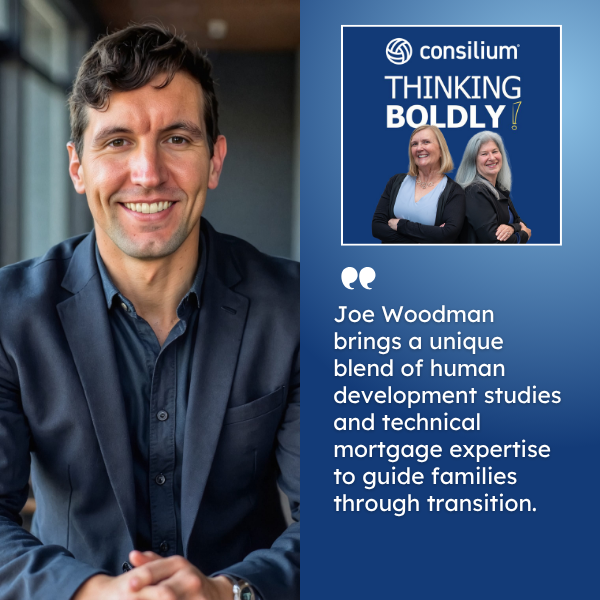
Let me tell everyone a little bit more about Joe. Joe is based out of Northern Colorado, where he grew up. He attended Colorado State University, where he earned a degree in Human Development and Family Studies. After years of working in the nonprofit sector, both locally and abroad, Joe transitioned into mortgage lending, where he found his calling in divorce mortgage planning. As a Certified Divorce Lending Professional with the Divorce Lending Association, Joe specializes in supporting divorcing homeowners as they restructure their families and their lives.
Joe is married with three school-aged children, and his hobbies include home improvement and martial arts. I know we’re going to want to talk with you more about many of those things, including the work that you did abroad. I know our readers will be very interested in knowing about that as well, along with everything that you do in your work as a divorce mortgage lending professional. Thank you for joining us. Let me start with, what is a CDLP? What is the Certified Divorce Lending Professional?
I know you guys had had Jody on before, and I had a chance to watch that.
She started the Divorce Lending Association. I met her probably within my first week of getting into mortgage lending. We worked for the same company, so we were a little bit of a cohort. She was predominantly working with people who were going through divorces, and a lot of this stuff would come up. As you’re getting into any new career, everything’s new. Jody made it very clear that divorce was a special thing as it relates to mortgages. I thought that was interesting, but I was also drinking from the fire hose at the time.
Eventually, I had my first divorcing client. It was like, “I’m going to do X, Y, and Z.” Jody, very graciously, said, “You can’t do that. It has to be treated this way. You have to do all of these other things and think about it in a different way.” I believe at that time, she was starting the Divorce Lending Association. She may have had some traction by then already.
Through that and then over the years, I was working with divorcing homeowners, and then I got the certification with Jody. I did the training and have kept that going. In addition to the training through the Divorce Lending Association Certified Divorce Lending Professional process, I was gaining real-world experience working with divorcing folks.
Navigating The Emotional Complexity Of Family Split
Can you highlight for us some of the things that make it such a different territory and a different terrain?
There’s a lot to it. The parts that are most interesting to me are not necessarily about the mortgage piece. It’s the complexities that come from the human piece because they’re not something that you can train for. It’s a combination of intuition and experience. How do you account for the chaos that’s going on in a person’s life? I try to use this to illustrate without saying, “I understand what you’re going through.” I would try to communicate, “I understand that there could be a level of challenge with some of this stuff.”
It’s pretty true that most of us are barely getting by with our normal lives. That’s assuming our health is okay, our finances are okay, and things with our kids’ school are okay, and all that. We’re barely hanging on. The idea that you take somebody who is barely hanging on under normal circumstances and then throw in what is probably like a top 2 or 3 most disruptive things that you can experience, maybe second to a health crisis thing, is such a wild thing to walk through somebody with.
The emotional complexities and the things that you could say in normal circumstances that you can’t say, the things that you have to say that you have to know how to say, the questions that you have to ask, those are the most interesting parts to me that are different. The most important part, technically, is how divorce settlement agreements and the legal process attached to divorce get filtered through, transferred to, or applied to the mortgage world.
For the mortgage guidelines, probably the best way to understand them is that it’s almost like another legal code, if you think about it that way. Another thing I’ll reference is there’s a book of guidelines for one loan program, like an FHA loan program or HUD, Housing and Urban Development. Most people know what that is.
The book is roughly the size of the Bible, and it’s filled with regulations and guidelines. Also, not to mention that your average attorney and courtroom doesn’t necessarily consider or care all that much what’s in that guidebook for good reason and not good reason. Some of it is bandwidth or a lack of priority.
They don’t teach it in law school.
We’ve got 10,000 other things to worry about that feel more important and arguably are more important, at least in the moment. If you can solve the real estate problem by saying something simple like, “In six months, the house is going to be refinanced to remove so-and-so’s name. They’re going to get an equity buyout for this amount of money. If that can’t be done, then the house needs to be sold.” That’s very simple. It’s clean. It’s common sense.
It’s fair for the legal professionals and everybody else involved in the subjects themselves to say, “Now that we’ve got that out of the way, let’s deal with these other things that feel so much more important,” like custody, child support, maintenance, and all that kind of stuff. That all feels way more important, and I understand that.
The problem is that when that is taken care of, and you move into, “Now we have to force this puzzle or this structure that is the divorce settlement through the FHA guidelines or the Fannie Mae guidelines.” You run into all sorts of problems like that, sometimes, there are divorce settlements that shoot themselves in the foot. They become complicated from a mortgage perspective. I’m sure from a legal perspective. Somebody might say that as well.
Divorce is a top disruptive life event. Standard mortgage guidelines aren't designed to handle that level of personal chaos. Share on XThere are also the surprises that come down the road. You go through what could potentially be a traumatic legal process or mediation. Maybe there’s a lot of contentious debate, argument, and negotiation, and then you come to a settlement. Whether it’s good or not, that feels like it’s working. It’s holding together. You run into everything that you thought about your life. Where you’re going to live, what your lifestyle is going to be like, where your kids are going to potentially go to school, and what your housing payment is going to look like, all of that we have to revisit. That’s not fun. It’s so difficult for the people who are going through that. It’s re-traumatizing.
Reclaiming Agency Through Strategic Planning
What I found in the divorce mortgage planning process is that if you do it in the right order, and you do it well. Not only are people prepared, but even in some rough situations, what you get is a sense of empowerment and agency. Even if you uncover a difficult circumstance, like, “I think I’m going to leave my husband or I’ve been told that this is happening. What can I do as far as real estate goes?” Which is a standard conversation.
Sometimes, the end of that conversation, assuming in this hypothetical circumstance that they’re choosing it, because oftentimes, it’s forced on them, is, “If you choose to go down this path, you are choosing a radical reconstruction of your life, not just as far as the family goes.” Which you’ve already maybe accepted, but you’re also going to have to live in a different community. Maybe you can no longer afford to live in a community that you want to live in. That may mean your kids change schools, and all sorts of potentially disruptive and difficult things.
When you give the person those options, and they feel educated and empowered, I feel like that energy transitions into more confidence in other areas of the divorce. They’re like, “I’m not going to necessarily have any control over what happens with custody, but because I’ve done the mental homework, I know that if I go down this road, I’m not going to live in my house anymore.”
They’re like, “I’ve made peace with that. It’s not going to happen to me. Even though it’s a tough decision, it’s a decision that I made.” That’s exciting and encouraging to me. I’m shocked at how often these seemingly horrible situations end up with an optimistic outlook or have some feeling of hope about what’s going to happen through the situation. That doesn’t always happen.
To your credit, Joe, I think a lot of that comes from you. Your training and your degree in Human Development and Family Studies helps influence how you approach the work that you’re doing with people with this very important process of figuring out what’s going to happen to the house after the divorce.
I remember you saying, Joe, in a formal conversation we had a while ago, about how sometimes you have conversations with people months before this is an issue in the separation agreement. Maybe even before they’ve consulted with a lawyer about the divorce. For our readers, for people thinking about it to know that’s an option. That’s a real, important thing to do.
Your ability to sit with someone in that difficult space in the way that you’ve described and help them envision what it is that they’re attempting to do, and that there’s more than one road. Some have roadblocks. Some have clearer paths. To understand and give them agency over that decision. At least if I have that roadblock, and I know that I have that roadblock, and I choose to go down that way, I know what I’m confronting. That’s a different way to enter any process.
It’s huge that you have that ability and skill. You call it intuitive, but you did say it comes with experience. That’s the sweet spot of a lot of things in life. You have the knowledge and the ability to fashion something from it that’s maybe not quite as tangible. It’s not that knowledge is tangible, but it’s a little more ephemeral. You can bring it together in a way that makes someone feel more whole.
You mentioned the experience and the educational background. My Human Development Family Studies degree is a great degree for grad school because it’s easy to get good grades. The challenge, though, is that I don’t know if you’d call it a deconstructive process. At least this is from my personal experience. I haven’t talked to other students or professors to know if this is a normal thing to experience.
Through the process, they’ll say, “Here’s a theory about why people are the way that they are.” You go, “That makes sense.” Then, they go, “In the next section, we’re going to teach you about why all that was wrong. Here’s another theory.” You go, “That makes sense,” then, another one. What I found is that by the end of it, you go, “I have no idea why people are the way that they are, and I don’t think anybody else does.”
It’s good for going into therapy. A lot of people go into marriage and family therapy because, at the end, you go, “I have no idea. I’m going to listen.” All sorts of different lifestyles, decisions, and ways of thinking come with different outcomes. It’s super helpful for working with people who are going through divorce because they’re at a particularly vulnerable place. It is maybe the most vulnerable place they’ve been in their adult lives, or maybe their whole lives.
I find that with divorce to go well, generally, you have to be patient about everything, but in particular, jumping to conclusions. When somebody says, “This is the way that things are going to be.” You have to go, “Maybe. Maybe not.” I can’t ignore that. Somebody says, “This is what I want. It has to be this way.” I’m like, “You said that. I don’t know if that’s going to change. Let’s give that some time.” Coming from that educational background helps a lot.
It sounds like the courses. Maybe it’s not about knowledge. It’s about finding the space to be comfortable in the ambivalence. When you say, “This seemed right, and this does, too. Maybe all seems wrong, too. How do we get to a place where I can live with it, and I can help craft something that is better than what I have?” In the end, isn’t that why someone’s going through this? Why would we try to be divorced if we didn’t think it would be an improvement in someone’s life? That would be an odd way to proceed.
It’s a strange thing to be experiencing from the inside when I’m looking at the financial devastation, potentially, that somebody will be facing, and to think, “This must be a bad situation because they’re willing to accept this outcome,” which feels like such a big step backwards. It’s not unheard of, but it’s not common for me to be working with both partners. There’s always this degree of uncertainty because I don’t know the other person. I don’t have the opportunity to connect with the person.
Oftentimes, unsurprisingly, when people are framing what they’re experiencing, it’s framed in the most negative interpretation of X, Y, and Z. It’s not always the case. I have an exception that I’m working with. I don’t think she said one negative thing about her partner. I’m always like, “Is she very professional, or is she truly cooperative?” Those happen, too.
I’ll never forget what somebody said to me once after I had crunched out a lot of numbers in terms of maintenance, child support, and what an after picture was going to look like. It wasn’t pretty. She looked at me and said, “I don’t care if I’m destitute. I’m doing this.” It was that moment of, “There’s nothing you could tell me right now about finances that would make me change my mind.” As long as you know, and still, you’re making that choice. This is still a better choice. You will craft something from whole cloth, and you’ll start this over because you don’t want to stay where you are. That’s, for some people, the best option.
I have to remind myself again in some of these difficult situations that I’m sure there’s an exception, but I’m pretty sure almost everybody I know who’s been through a divorce either has said that they would consider their life better or some an improvement. Whether it’s a new relationship or more independence, or whatever. I bet if I thought about it, I could probably think of an example. I don’t think I’ve met anybody who said, “It was an absolute disaster. Life is worse now. I wish I could go back.” I’m like, “You’ll probably feel like your life has improved at some point.”
When you do real estate planning early in a divorce, you give clients a sense of control and empowerment during a tough time. Share on XIt may not be immediate.
Sometimes, time has to go by. You have to reframe and re-figure it. It doesn’t all happen at once. There are moments, certainly, when you have that low point, and it’s like, “Why did I do this? How bad was it?” It could be a revision of memory, like, “Maybe it wasn’t as bad as I thought it was.” You start reconstructing. That happens. People do have regrets along the way sometimes. That’s why it’s important to gather information, sit with it, think it through, and have the opportunity to engage in therapy around issues that maybe were about your own growth, your partner’s growth, or the relationship. Nothing stays still in the world.
The Power Of A Collaborative Advisor Team
Through the last few minutes of what we’ve been talking about, I want to share some of the value that I find in Consilium Tapestry. Since what I do touches on so many areas of people’s lives, I end up having to give a lot of homework. It is not necessarily easy, but it’s simple. I’m like, “Realistically, what do you think you can afford through this transition?” Sometimes, they have to go and figure out, “What are my expenses?” That’s fairly straightforward.
Oftentimes, it’s, “I need you to talk to somebody about how important this is. You want to hang on to the house. I need you to figure out how important that is because there are major financial consequences to doing that, for example.” I, for better or worse, will try to explore that a little bit. I’d probably be better off not having the conversation, but to be able to say, “This is an important conversation. This is something that you talk about with your therapist, your trusted friend, or whatever.” Ideally, those kinds of things happen with therapists, in my opinion, because trusted friends usually have a very strong opinion about something. It may or may not be impartial.
It is being able to say, “These are the things that you need to figure out before we even talk about the financial piece. I can tell you what can be done. I can’t tell you what should be done.” Honestly, most people who are in the middle of a divorce, I don’t think that if they were honest with themselves, are all that qualified to assign a should to something, or at least certain areas, without some sort of support to help.
Your mind is so absorbed in what you’re going through at the moment. You’re making decisions that have 30-year lifelong implications through a lens that’s hyperintense for that 3 months, 6 months, or 12 months. For the attorney piece, even when attorneys aren’t involved, these are legal questions you need to discuss with an attorney. Then, there are tax things. Being able to have a number of people, especially when they are in the tapestry in Consilium as well, because I know that they’re not going to be surprised when I give them that homework or when I reach out. That team approach helps me tremendously.
I’m so glad to hear that because our vision, certainly with the Tapestry, is exactly that. You shouldn’t ever feel, when you’re calling someone in the tapestry, that they wouldn’t accept your call and want to work with you. For people who are going through this, to know you hire one, but you get a whole lot more. You have all these other people in your advisory who are there to assist you along the way. That’s a huge added value.
What advice would you give to your colleagues in the tapestry who are mental health professionals or attorneys about you and your role? How can they work with you as part of this council of wise advisors for a particular client?
I don’t think you can overestimate the importance of the mortgage, the real estate, and the equity conversation very early in the process. There’s a, “You need to do that to avoid problems,” approach, and that’s right. Also, because it’s such an emotional conversation, but also so practical, systematized, and constrained. It’s something that can be leveraged for progress in other areas. It’s like, “Let’s figure out what’s driving where this person’s at financially, emotionally, and psychologically, as far as what’s important with the kids.”
The conversation around real estate is a conversation about assets, but it is not a conversation about assets. Unless it’s a rental property, very rarely is a person’s primary residence an asset to them. It’s something so much bigger than that and so much more important. Things will be unearthed in the conversation. I’ll have moments where I’m able to say, and I love to be able to do this, and communicate to an attorney, “It seems to me like these are the things that are important. This is what they’re worried about,” those kinds of things.
That’s terrific. What you do as a lender is not something people encounter on an everyday basis if they’re not in the business. If they bought their house 15 or 20 years ago, and they had an interaction with a lender. They may well not be in a relationship with that person. They may not even know, because it was so integrated into the real estate purchase, how important it was in terms of restructuring their family and how that would play out. It’s one of those silent pieces as far as a consumer’s concern about the residential real estate transaction process. It has to happen for most people, but once it happens, it goes silent.
When I bought my first house, that was my experience. You forget about it. I don’t get frustrated when somebody’s like, “Why would this be important?” I’m like, “That makes sense.” If you own a home, you’ve been forced through this process. You may not have experienced it as much of a process because the consumer is largely shielded from that process unless something goes wrong. If you have a friend who’s experienced negative lending. All of a sudden, the reality of it comes, like, “Why am I going to lose my earnest money?” They realize, “We’re trying to force a square peg through a round hole. Why is the whole round? Why is mine square?” You don’t want to have this conversation, I promise you.
Joe, I am curious how you got into doing what you’re doing and your background before it. If you can take us through it a little bit, because I’m sure it’s an interesting journey.
From Transactional Loans To Compelling Counsel
For people in the mortgage business, it’s pretty common to say that you’re forced into it or you fall into it. If a middle schooler were to say, “I’m going to be a lender.” You should be a pro football player or whatever. Pick that. It’s not something that’s easy to get into. It’s not the kind of industry where you’d see a lot of job openings, that kind of thing. You don’t have to have a college degree to do it.
I was making very little money in the nonprofit world. I was taking some grad coursework online at the University of Denver with the naive Millennial ideal, “I’ll go get a graduate degree and then make more money.” That was my thought process. I was taking graduate coursework. I had a bunch of student loans before that, and I’d add another $20,000 in student loans. I was taking a finance course.
This is my mid-to-late twenties. I am doing future value of money calculations on Excel spreadsheets, and I’m starting to go, “This compound interest thing is odd.” I’m calculating, “If you want a Snickers bar because you’re at the gas station and you’re like, ‘I’m hungry. I’m going to go buy it,’ that’s a lot of retirement money that you’re spending on that half-thought-through snack.” I started to think about the inverse of that with debt, and then I got freaked out and realized that I put myself in a pretty bad financial position.
I didn’t grow up with much financial education. My family, like a lot of middle-class Americans, gets by. You borrow whatever’s necessary for school, for example, because that’s a guaranteed investment. What I started to realize is, “I’m going to get a graduate degree. My income, even with a graduate degree, is going to be too low to justify even the money that I’m borrowing to do this. Not only do I need to stop this graduate coursework, but I need to re-examine career options.”
A lot of the nonprofit work that I’ve done prepares you for everything but qualifies you for nothing. My sister is a real estate agent. She’d been trying to get me to be a real estate agent forever. I was like, “That sounds like the worst. I’m not going to do that. Why would anybody want to do that?” Eventually, she shifted her tactic and was like, “You should be a lender.” I was also like, “Why would anybody want to do that? I don’t even know what that is.”
A home is more than just a financial asset. It holds deep emotional weight, and we can't ignore that during a family split. Share on XI owned a house, but I didn’t know what a lender was. I remembered the lender, but as you said, you don’t think about it. I’d send an email and say, “Can I do this?” and they’d say yes or no. Eventually, my sister CC’d me on an email with some people and was like, “My brother is thinking about getting into the business.” By then, I’d gotten desperate enough through trying to find other career positions.
Otterbox famously had this entry-level where you work for a contract position, and you work your way up. I was looking into that as my best option at the time, but the financial constraints were too dire to do an entry-level work-your-way-up kind of thing. In the mortgage business, you control your own destiny. You control, “Am I going to be fabulously successful, or am I going to be a train wreck?” I was in a position where I had to take that risk.
It’s a weird business. It doesn’t suit my personality all that well. There are certain aspects that do. The divorce mortgage planning is when I feel the most at home, I suppose. That’s where I feel like I’m doing what I’m good at, what I like to do, and that I have something unique to offer as opposed to the general mortgage business.
It’s the counseling piece.
The mortgage business is very transactional. It can be. I hate that. I don’t like that at all. The divorce process is not transactional. You’re working with these people for a long time.
Unless you treat it as transactional, which, unfortunately, some people do. It’s more important to have you involved in a transaction that brings humanity to it than a situation where it’s like, “You’re getting divorced, but what we have to focus on is the numbers and getting you through the process.” That feels devoid of any compassion.
Is the majority of your work with divorcing clients at this point, or is it a mix?
It’s a mix. The way I have my team structured is I have a team, a business partner, and an assistant, and it is set up so that we can continue to grow. If I could push a button and have my ideal work circumstance, I would probably only do divorce mortgage planning and then also reverse, like a HECM, because it’s similar. There’s a lot of commonality. There is a huge restructuring when people are at that phase of life. Oftentimes, they need solutions that aren’t about mortgages. You have a different kind of relationship with the client in both of those circumstances. You don’t necessarily have to, but you should.
That part, the divorce mortgage planning, I would like to continue to grow. Not that I don’t like doing purchases and your general stuff, but I tend to only want to do that if it’s a less transactional kind of thing. If somebody calls me and says, “I need an interest rate or I’m closing.” Generally, I’ll say, “Awesome. Work with my business partner.” I’ll make that connection.
I might still manage the relationship to a certain extent. Outside of the transaction, I might call, check in, and see how they’re doing. Also, with train wreck situations or complicated situations, I tend to still get engaged there, whether it’s multi-generational. One that comes up is multi-generational purchasing situations, where it’s very complicated finances. There’s a level of complexity where I start to feel like I care more.
You feel a little bit more inspired and engaged. You need that energy.
You need that people connection and that intellectual challenge, too. It’s the combination.
What states are you licensed in? I want to ask.
Colorado, Wyoming, Michigan, Florida, and Arizona. My business partner is licensed in Texas and Montana. It’s not that hard to add states, especially with the divorce mortgage piece, because it’s so different. I will probably continue to add states as it makes sense to do so.
I did want to ask you about your international nonprofit work, where you were, and what you were doing, because I think that is an interesting dimension to your background.
Lessons In Empathy From Global Nonprofits
I lived in Nicaragua for about fifteen months. There was a nonprofit that runs a children’s home in the Philippines. It was a weird role. A lot of what I did was work with short-term volunteer groups that would come through as a liaison, but I also functioned as pseudo-staff to the children’s home. I lived in the teen boys’ house, which was interesting, because they had little homes. A lot has changed. This was many years ago. At that time, they had one house with kids who, I believe, were under ten.
Did the kids lose their parents? What were the circumstances?
Traditional mortgage guidelines are like another legal code. Attorneys and lenders must collaborate to avoid structural traps. Share on XThis system is changing in Nicaragua. They’ve been trying for a long time to move towards a kinship-foster model as we have here, but they still rely pretty heavily on government and nonprofit-run orphanages, for lack of a better word. It’s a misnomer to call them orphanages because very few of them were true orphans. Most of them were reported by their community members. It’s like DHS. They were placed in a home.
They’re all long-term placements, though. At least our facility was not one where somebody would come in for a few months. There were a lot of children of prostitutes. Oftentimes, it was siblings. You’d get three, four, or five that were all related and then cousins. I’ve worked adjacent to DHS here in the States. I’ve seen how our system works here.
We take it for granted. In fact, it’s crazy how well the kinship system works. It’s got a ton of problems, but compared to what I’ve seen down there, the odds of one person being incapable of taking care of their children, or the odds of their sibling, their cousin, or their mother being able to, are pretty low. The poverty is so extreme there. There were maybe 1 or 2 true orphans, but for the most part, they had parents who were not capable of taking care of them due to lifestyle addiction and those kinds of things.
You said they would live in this home for years. It sounds like they lose contact with their biological family.
I don’t think most of them completely lost contact. Sometimes, people would come to visit. Some circumstances wouldn’t allow for that, but it wasn’t uncommon for somebody’s mom to come and see them every once in a while, or certainly grandmother, that kind of thing.
What an eye-opening experience, I’m sure, at that age, for you to experience something so profoundly different from what you’d ever seen before.
It was life-changing. There’s the cross-cultural piece, and also working with people in poverty. To be honest, working with people in poverty is hard. Working in the nonprofit world, I did similar things to what I focus on in the mortgage world. It’s so much easier to make progress when you’ve got a case, like a divorce case, where people are generally moving forward. They generally have the means to move forward in their life. In the cycles of poverty, it can wear you out.
There are saints among us who do that for a career their whole life. Somebody has to. It boggles my mind every time I find somebody who can sustainably do it because it wore me out so fast. For a number of years, you get burnt out. Some people give 20 or 30 years of their life to that. They are better than me in a lot of ways.
Yes and no. What this shows is the level of heart and compassion that you bring to the space that you work in. I’m sure that your divorcing clients and the people that you connect with in the tapestry see that.
Thank you. I hope so. Especially for those clients, they’re maybe expecting a transactional conversation. After it, they’re like, “I feel like I have somebody on my team.”
An unexpected gift for a lot of people, I’m sure, when they’re working with you.
You’ve talked a lot, Joe, about the journey that you’ve taken yourself in terms of your life and thinking about going to graduate school and therapy, and getting grounded in thinking about how people think and where they come from. It was interesting because you had talked with us a little bit ago about the life-changing book that you read, which was Crime and Punishment. Tell us about that, how that is built into who you are, and why it was life-changing for you.
I don’t know how common it is, but I was in high school from 2000 to 2005. I somehow caught a bad, nihilistic, cynical bug. A lot of teenagers, especially teenage males, catch that for a variety of reasons. I didn’t have a strong reason not to, I suppose, now that I look back. Some people have some anchors that can withstand some of that influence. I had a series of experiences that changed me, but it wasn’t supported by an intellectual framework. It wasn’t very explicit, thought out, or fleshed out.
Literature As A Framework For Human Nature
I looked up 100 books that every man should read or something like that, and it was on there. I read it when I was living in Nicaragua. I’m immersed in Spanish. I don’t get to speak a lot of English. They had gotten the internet when I was there. You did have internet access, but no smartphones. I had a cell phone that I could text people. You pay-per-text kind of thing.
The books that I read during that phase of life had a particularly deep impact on me. That was the first time I read a book. While I was reading it, I realized that the way I think was changing. That was a strange experience. As I’m reading it, I’m going, “My personality is changing while I’m reading this book.” For weeks after, you’re sitting and thinking about it. The Raskolnikov character so perfectly encapsulates a certain type of person that is very common. There’s pride, arrogance, sadness, and pain. There’s this whole mix of things. He’s a genius, Dostoevsky. It raised my expectations for what a book could be.
Have you ever found anything that matches that expectation since? Any other books?
I don’t know that I’ll ever be impacted as much by that book because of the time of my life. There are a few books that I’ve read since then where I’m like, “If I had read this and gotten it when I was 23 or 25, maybe it could have had that impact.” This isn’t a good game to play, but if only I had my head on straight enough to read a book when I was a teenager.
That would have been a big laugh to read it now.
We must be patient and avoid jumping to conclusions when helping clients navigate the financial devastation of a broken home. Share on XI was forced to read a lot of these books when I was in high school, but I didn’t get them. I was not mature enough. Coming back, going through the high school literature reading lists, and being like, “They put some gems in there.”
Have you read The Master and Margarita?
I have. It’s been a long time.
We think it might resonate.
When did I read that? It was several years ago. I need to read it again. Honestly, I don’t think I got it. I’d be curious to read it.
I listened to it not that long ago. I’m a fan of sometimes listening to a book. If I’m listening to a book and I’m not getting it, then I read it. If I’m reading it and I’m not getting it, I sometimes listen to it.
I might have listened to it as well. Now that I think about it, I can’t quite remember.
I ended up doing both. You’re making me want to read Crime and Punishment again because it’s been about 35 years since I read it.
Same. Joe, thank you so much for taking the time to talk with us. Thank you for sharing the gift that you bring to your clients and how valuable and unique that is. People who are going through divorce and dealing with what is the biggest financial asset in most marriages. Probably the biggest emotional asset in both marriages and in their marriage is to need someone like you who comes at it not just with head but with heart. Thank you for everything that you do. Thank you for being a member of the Tapestry. We’re so excited to have you with us and to see where you go next with this great adventure that you call life. Thank you for being. letting us be part of yours.
Thank you. Thanks for asking such great questions. Anytime I get an opportunity to talk about books, especially.
It was a delightful conversation. Those are the best. It is when they meander and minds meld. Thank you.
Thank you very much.
Important Links
- Joe Woodman on LinkedIn
- Gravity Mortgage Solutions
- Crime and Punishment
- The Master and Margarita
- When the House is in the Middle: Strategic Divorce Mortgage Planning
About Joe Woodman
 Joe is based out of Northern Colorado, where he grew up, attending Colorado State University, where he earned a degree in Human Development and Family Studies. After years of working in the non-profit sector, both locally and abroad, Joe transitioned into mortgage lending, where he found his calling in divorce mortgage planning.
As a Certified Divorce Lending Professional (CDLP) with the Divorce Lending Association, Joe specializes in supporting divorcing homeowners as they restructure their families and lives. He is married with three school-age children, and in his hobbies include home improvement and martial arts.